
Porsche Fuchs Wheels: History, Sizes and Choosing Fuchs for a 911 Backdate
Porsche Fuchs Wheels: History, Sizes and Choosing Fuchs for a 911 Backdate
Few design details say “classic 911” as clearly as the five-spoke Fuchs wheel. It debuted in the 1960s, stayed on the 911 for more than two decades, and is still the first choice for most backdate builds. Here is everything you need to know before you choose a set.
A short history of the Fuchs wheel
When Porsche launched the more powerful 911S in 1966, it wanted a wheel that was lighter and stronger than steel. The answer came from Otto Fuchs, a German forging company, which produced a five-spoke forged aluminum wheel designed with input from Porsche’s stylists. The distinctive “cloverleaf” pattern of the spokes became one of the defining features of the car.
Fuchs wheels went on to become standard or optional equipment across most 911 models into the late 1980s, and they featured on legendary cars like the Carrera RS 2.7.
Original Fuchs sizes
Over two decades the wheel grew with the car:
- 15-inch: the original size, offered in progressively wider fitments from the 1960s through the 1970s, with the widest rear wheels reserved for RS, Carrera and Turbo models.
- 16-inch: introduced in the 1980s on the Carrera 3.2 and Turbo to suit larger tires and brakes.
- Modern 17- and 18-inch: produced today for restomods and backdates that run modern tires and bigger brakes.
Finishes: which look is right?
Classic Fuchs came in a handful of finishes, and each changes the character of the car:
- Silver anodized with black centers: the classic early look.
- Black anodized spokes with polished lips: the 1970s and 1980s look many people picture.
- Satin or body-color painted: a subtler, modern take that works well on bespoke builds.
Genuine vs replica Fuchs
Because the design is so popular, cast replicas are common. Genuine Fuchs wheels are forged, which makes them lighter and stronger. On a car where unsprung weight and quality matter, forged wheels are worth the premium. Always check the markings and buy from a reputable source.
Tires for Fuchs wheels
Fifteen-inch Fuchs look right because of the tall tire sidewall that goes with them. Classic-pattern tires in period sizes keep the proportions and the steering feel of an early 911, while modern performance tires in the same size give far more grip without spoiling the look. Sixteen-inch Fuchs, as fitted to later G-series cars, allow a wider choice of modern rubber and suit more powerful builds.
Offsets matter just as much as diameter. Getting the wheel to sit perfectly in the arch, without rubbing on full lock or under compression, is a big part of what makes a backdate look finished rather than modified.
Refurbishing and caring for Fuchs
Genuine Fuchs are forged aluminum and are very strong, but decades of use leave their mark: curb damage, corrosion under the anodizing and tired paint on the centers. A proper refurbishment strips the wheel, repairs damage, then refinishes it to the original spec, with polished or anodized spokes and painted or black centers.
- Clean them with a pH-neutral wheel cleaner. Harsh acid cleaners can damage anodized finishes.
- Have the wheels checked for cracks and straightness before fitting new tires.
- Use the correct wheel bolts and torque settings. Fuchs use specific hardware.
Choosing Fuchs for a backdate
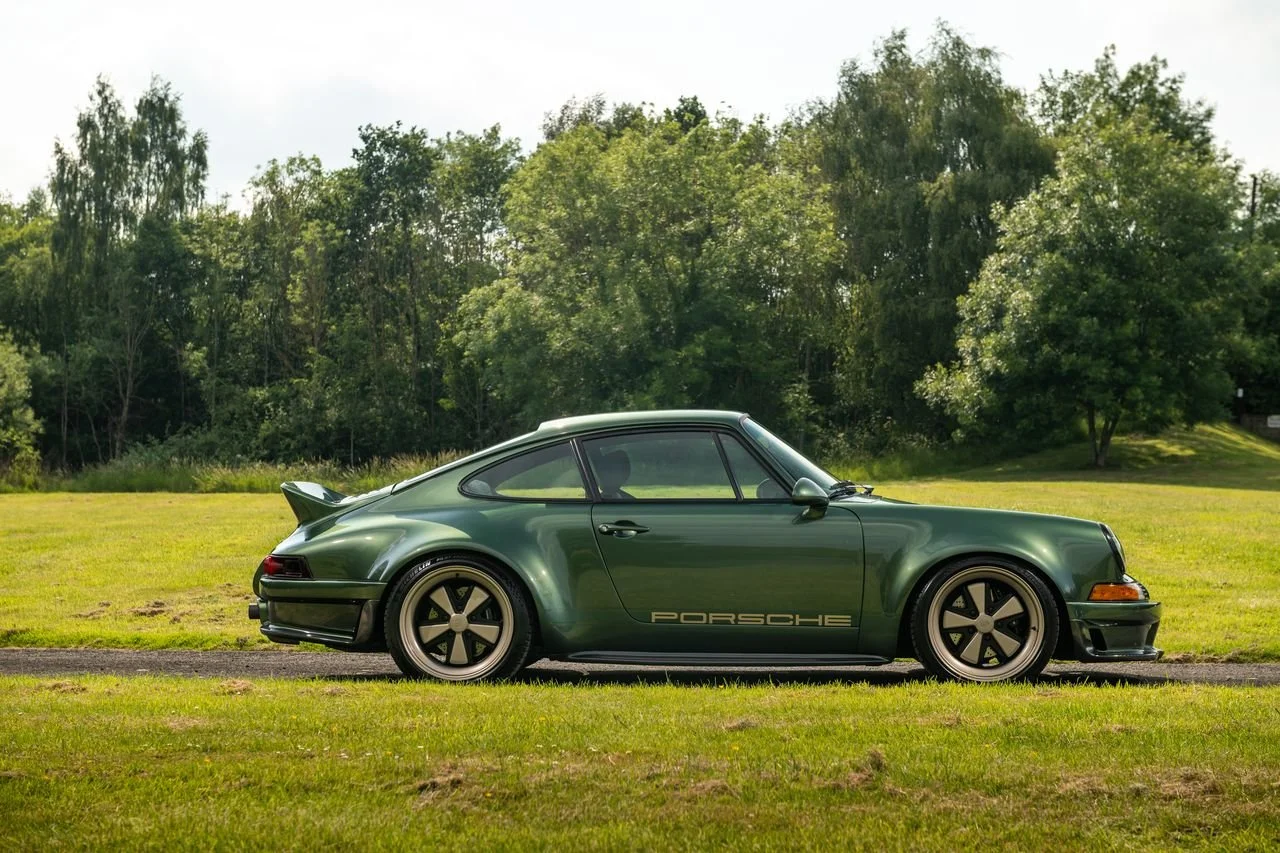
On a modern backdate, the wheel has to do more than look right. It must clear upgraded brakes, carry modern performance tires and suit the car’s track widths. That is why most builds use larger forged Fuchs than the originals. The Shoreline 911 GTR Classic, for example, runs genuine Fuchs in 18x9 front and 18x11 rear with Michelin Pilot Sport tires, keeping the classic silhouette while giving modern grip.
Wheel choice sits alongside paint and trim in the overall design of a custom Porsche 911 backdate. For more on how exterior details come together, see Sculpting the Legacy: the GTR widebody.
Frequently asked questions
What are Fuchs wheels?
Fuchs wheels are forged aluminum five-spoke wheels made by Otto Fuchs for Porsche. They were introduced on the 911S in 1966 and became the signature wheel of the classic 911.
Are Fuchs wheels still made?
Yes. Porsche Classic and specialist manufacturers produce new forged Fuchs-style wheels, including larger diameters suited to modern tires and brakes.
What size Fuchs wheels does Shoreline use?
The Shoreline 911 GTR Classic runs genuine Fuchs wheels in 18x9 front and 18x11 rear with Michelin Pilot Sport tires.
Your air-cooled 911, built around you.
Every Shoreline car is a hand-built Porsche 911 restomod, engineered from a hand-picked 964 or 993 donor and specified entirely by you. Build slots are limited each year.