
Is a Porsche 911 Restomod a Good Investment?
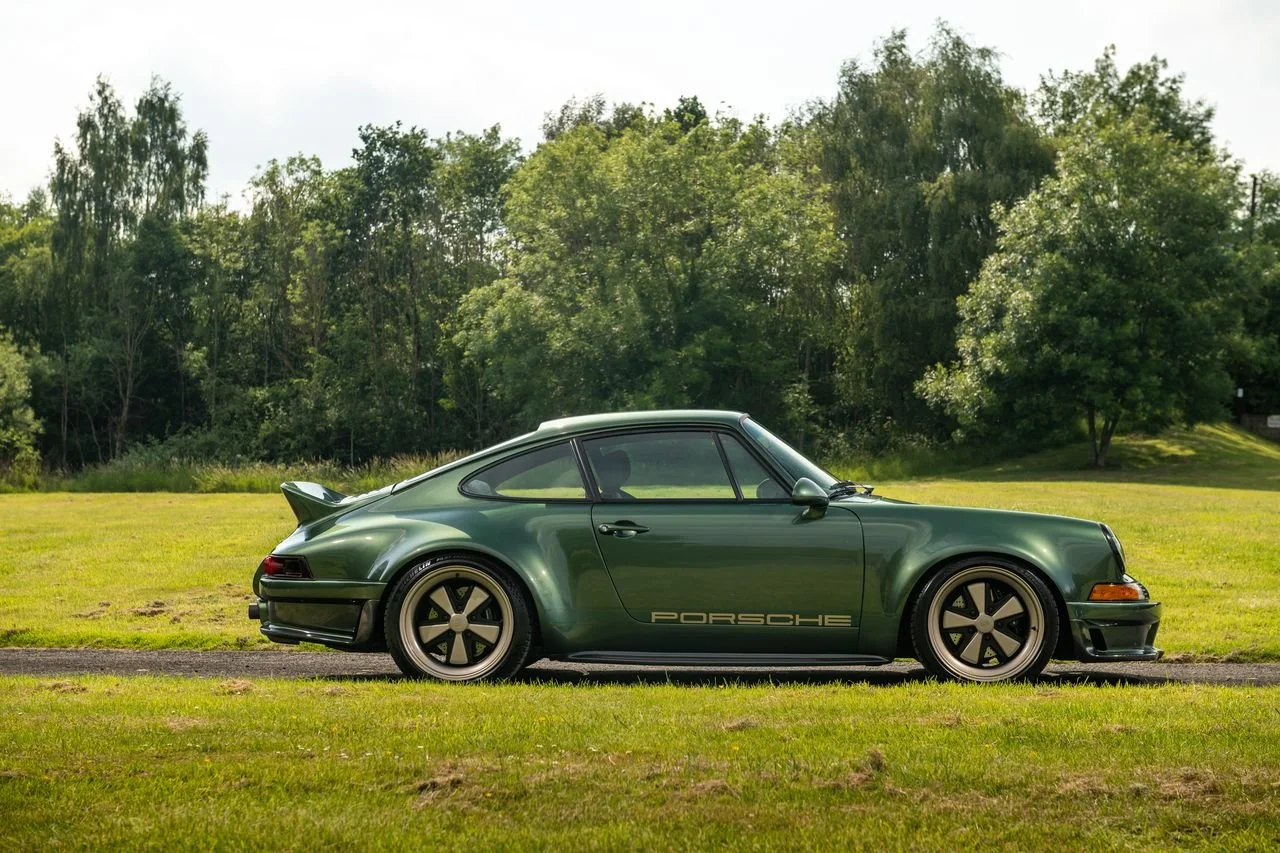
If you're weighing up a restomod against buying a numbers-matching original, the honest answer is: it depends what you mean by "investment." A restomod is not going to appreciate the same way a concours-original 911 might, and it isn't trying to. But that doesn't mean the money you put into one disappears. Here's how value actually works in this market.
Restomods aren't valued the same way as originals
A factory-original 911, especially a rare early long-hood car, is valued almost entirely on authenticity: matching numbers, original paint code, unmodified drivetrain. That market rewards a car for staying exactly as it left the factory, and prices can climb accordingly as genuinely untouched examples become harder to find.
A restomod plays a different game entirely. Nobody is buying one expecting factory originality; they're buying craftsmanship, specification, and the quality of the build itself. Within that market, value is driven by who built it, how well it was built, and how thoroughly it's documented, not by how closely it resembles what left the factory in 1972.
Why the top of the restomod market holds value so well
Look at what's happened to Singer-built cars over the past decade: cars that sold new for high six figures have, in several documented resale cases, sold again for more than their original commission price. That's not typical of the broader restomod market, but it proves the principle. When a build is executed to an exceptional standard, with full documentation and a name behind it that buyers trust, the market treats it as a genuine collectible category of its own, separate from and in some cases outperforming original 911 values.
The factors that drive this:
Documentation. A build with a complete photographic record from bare shell to finished car gives a future buyer confidence in exactly what they're getting. Undocumented modifications are a liability at resale; documented ones are an asset.
Build quality. A bare-shell rebuild with rebuilt drivetrain and properly sorted mechanicals holds up differently than a bolt-on kit over an unmodified donor. Buyers researching resale can usually tell the difference, and the market prices accordingly.
Builder reputation. As with any category, buyers pay a premium for a name they trust to have done the work properly. This is part of why the specialist workshops we cover in where to find restoration specialists command the prices they do.
What actually erodes value
Undocumented or unclear modification history
Poor fit and finish, especially on the bodywork transition to long-hood styling
Mechanical shortcuts that surface later as reliability issues
No clear provenance on the donor car itself
This is exactly why donor sourcing matters as much as it does. Our VIN and chassis number guide covers how we verify a donor's history before a build ever begins, because a clean paper trail on the donor protects the value of the finished car.
Restomod vs original: the honest trade-off
If your primary goal is appreciation as a collectible, a genuine numbers-matching original in excellent condition is still the more conventional path, and the market for those cars is well established. A restomod is a different proposition: you're paying for a car built exactly to your specification, with modern drivability an original simply can't offer, and a resale market that rewards quality and documentation rather than factory originality. For a deeper look at how these two paths differ beyond just value, our backdating vs standard restoration comparison covers the full picture.
The Shoreline approach to protecting your build's value
Every Shoreline 911 commission is documented from donor inspection through final delivery, with the platform, specification, and build history all recorded. If you're weighing platform choice as part of that decision, our 964 vs 993 comparison breaks down how that choice affects both the finished car and its long-term value.
Start a conversation about your build or browse current Shoreline 911 builds.