
Porsche 964 vs 993: Which Is the Better Platform for a Backdate Build?
Porsche 964 vs 993: Which Is the Better Platform for a Backdate Build?
It's the question that comes up in every first conversation with a new client: should I start with a 964 or a 993?
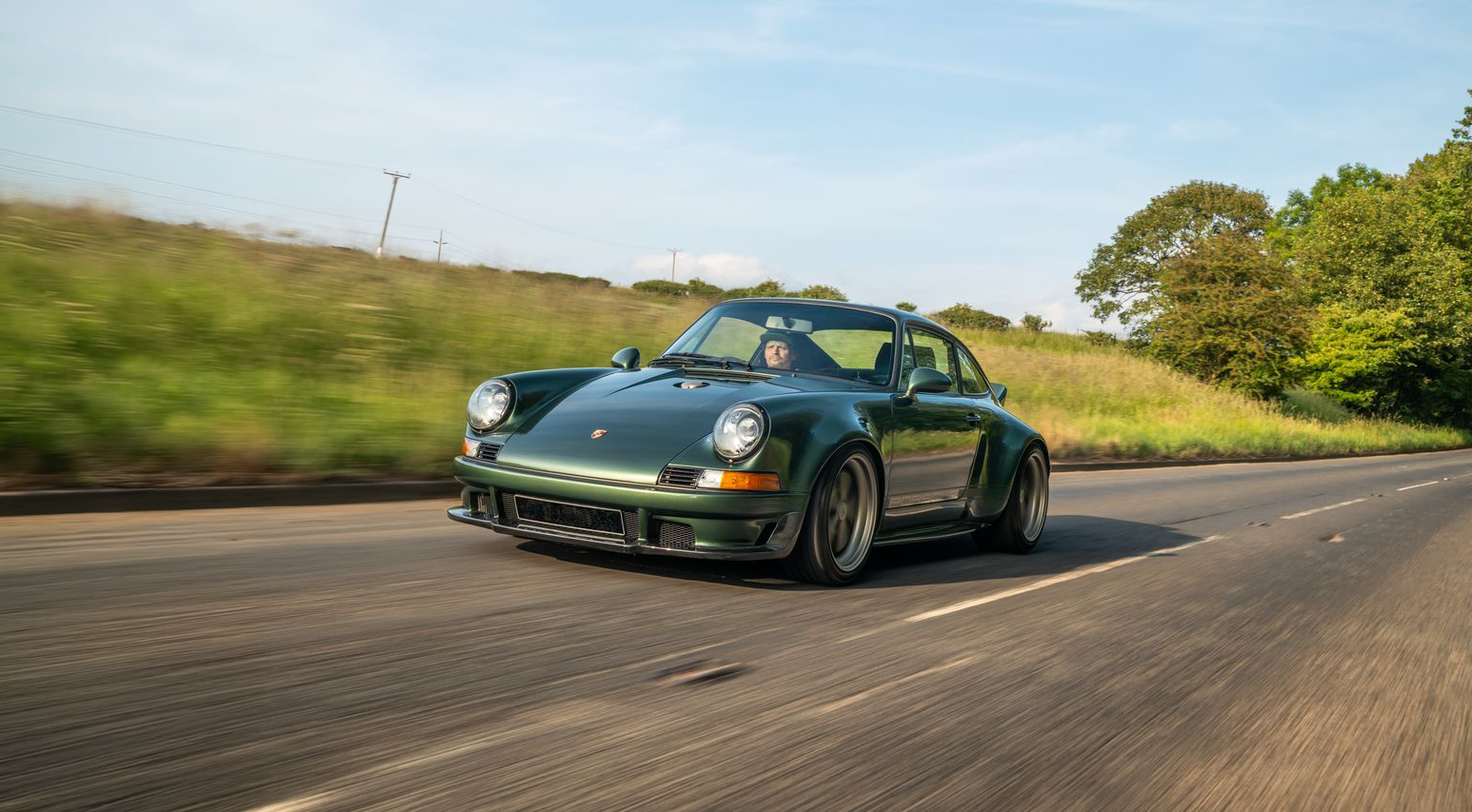
Both are air-cooled. Both are brilliant. And both make exceptional foundations for a ground-up backdate. But they're not interchangeable — and choosing the right one depends on how you want the finished car to feel, what you plan to do with it, and honestly, what matters most to you as a driver.
Here's what we've learned after building on both platforms extensively.
The 964: Raw, Compact, and Closer to the Source
The 964 (1989–1994) was the first 911 to get power steering, ABS, and coil springs at the rear. Porsche modernised the underpinnings while keeping the proportions tight and the driving experience analogue. For a backdate, that matters.
Why builders love it:
The 964 shell is narrower in the hips than the 993. When you fit long-hood bodywork to it, the proportions land closer to a genuine early 911 — the kind of car that makes people stop mid-sentence in a car park. The roofline sits lower, the greenhouse feels more intimate, and there's a visual honesty to the shape that's hard to manufacture from a wider platform. Because the 964 aligns naturally with this aesthetic, the transformation tends to involve less reshaping — sculpted bumpers, narrower arches, central fuel fillers and period-correct lighting all sit comfortably within its existing proportions rather than fighting against them.
Mechanically, the 964's 3.6-litre M64 engine is a known quantity. It responds beautifully to a rebuild with sport camshafts and individual throttle bodies, and a well-prepared 964 motor will comfortably produce 300–330 BHP while staying naturally aspirated. That's more than enough to make the car genuinely fast without overwhelming a chassis that weighs around 1,350 kg.
What to know before committing:
The 964's original wiring loom is simpler but more dated. A full backdate build typically involves replacing or heavily modifying the electrical system, which adds cost but gives you a clean foundation — you can see how that fits into the wider build process from donor to finished car. The rear suspension geometry — semi-trailing arms — is effective but less sophisticated than what came next. It's a car that rewards smooth, committed driving. It doesn't suffer fools, and that's part of the appeal.
Best suited for: Drivers who want the most authentic early-911 look and feel, who value lightness and simplicity, and who don't mind a car that asks something of them.
The 993: Refined, Wider, and More Capable Out of the Box
The 993 (1994–1998) was Porsche's last air-cooled 911, and they knew it. Everything about the car reflects a manufacturer trying to perfect a formula before moving on. The multi-link rear suspension — called LSA, or Lightweight Stable Agile — was a genuine engineering leap. It made the 993 more predictable at the limit than any air-cooled 911 before it.
Why builders love it:
If the 964 is a scalpel, the 993 is a broadsword. The wider rear arches give you more room for rubber, and the improved suspension means you can push harder before the car starts talking back. For clients who want a backdate they can drive hard — on track days, through Alpine passes, or simply with full confidence on a wet British B-road — the 993 gives you more margin.
The 993's M64/05 engine is a further evolution of the same flat-six. In stock form it produces around 272 BHP, but like the 964 motor, it takes beautifully to a rebuild. A 3.8-litre conversion with optimised cam timing and intake work will put you north of 340 BHP, and a supercharged setup can stretch beyond 400 BHP if that's the direction you want to go — our 911 GTR Evo is built around this upper end of the performance envelope.
What to know before committing:
993 donor cars are generally more expensive than 964s, and the market has been climbing. The wider body also means the proportions change when you fit long-hood bodywork — visually, it requires more work to step backwards in time than the 964 does. It can look spectacular, but it reads as a more muscular, modern interpretation rather than a faithful period piece. Some clients love that presence. Others want something more delicate.
The 993 also introduced a dual-mass flywheel and a heavier gearbox assembly, so the powertrain has a different character at low speeds. It's slightly less snappy off the line, though the mid-range and top-end delivery more than compensate.
Best suited for: Drivers who want a backdate they can use hard and often, who value composure over rawness, and who want the widest envelope of performance.
Performance Potential, Side by Side
Both platforms offer remarkable headroom once you start specifying the build. At Shoreline 911, our 964 and 993 backdates are typically built around one of three performance tiers:
A 3.6-litre naturally aspirated flat-six with individual throttle bodies, producing approximately 300–330 BHP
A 3.8-litre conversion with optimised cam timing and intake work, reaching around 340 BHP
A supercharged 3.6-litre setup, capable of up to 400–410 BHP for clients who want the full envelope
On either platform, you can also choose between a Carrera 2 layout for traditional rear-engine agility or a Carrera 4 configuration for added traction and stability. Because both the 964 and 993 share strong mechanical architecture underneath, they respond exceptionally well to modern suspension, braking and drivetrain tuning — so even a heavily specified build drives with genuinely modern confidence. If you want to see how these tiers affect pricing, our backdate cost breakdown walks through it in detail.
Interior: Reimagined From the Shell Up
Whichever platform you choose, the interior is stripped back to bare metal and rebuilt around purity, craftsmanship and driver engagement. Body-coloured interior tubs, period-inspired gauge clusters and minimalist dashboards set the tone, finished with handcrafted leatherwork throughout. The aesthetic stays true to the era, but we can discreetly integrate modern comforts where it counts — PCCM with Apple CarPlay, upgraded audio, improved climate control — without the cabin ever feeling like a compromise between old and new.
The Factors That Actually Decide It
In our experience, the platform choice usually comes down to three things:
1. How it looks standing still
The 964 gives you a slimmer, more traditionally proportioned backdate — you'll see that character in our 911 GTR Classic. The 993 gives you something broader and more aggressive. Neither is better — but most people have an instinctive reaction to one over the other. Trust that reaction.
2. How you plan to drive it
Weekend blasts and spirited road driving? Either platform will deliver. Regular track use or high-speed touring? The 993's suspension advantage becomes meaningful. City driving and concours appearances? The 964's lighter, more manageable dimensions might win.
3. Budget and donor availability
A clean 964 Carrera 2 shell is typically more accessible than a 993 equivalent, though both markets fluctuate. The 993's more complex suspension and electronics mean higher baseline costs for a full build, though the gap narrows once you factor in the electrical overhaul a 964 usually needs.
There's No Wrong Answer — Only Your Answer
We've built cars on both platforms that clients describe as the best thing they've ever driven. The magic isn't in the donor — it's in the clarity of the brief and the quality of the execution.
If you're weighing up the two and want to talk through the specifics for your build, get in touch. We'll give you an honest steer based on what you actually want from the finished car — not what we happen to have on the shelf.
Shoreline 911 builds bespoke Porsche 911 backdates on both the 964 and 993 platforms. Every build is commissioned to order and crafted to the individual driver's specification. View current projects or get in touch to start a conversation about yours.
Your air-cooled 911, built around you.
Every Shoreline car is a hand-built Porsche 911 restomod, engineered from a hand-picked 964 or 993 donor and specified entirely by you. Build slots are limited each year.
Keep reading
See how we build custom Porsche 911 restomods and backdates, from donor car to delivery.
Choosing a donor car? Read Porsche 964 vs 993: which is better for a backdate.