
Daily Driving an Air-Cooled 911: Myth vs. Reality
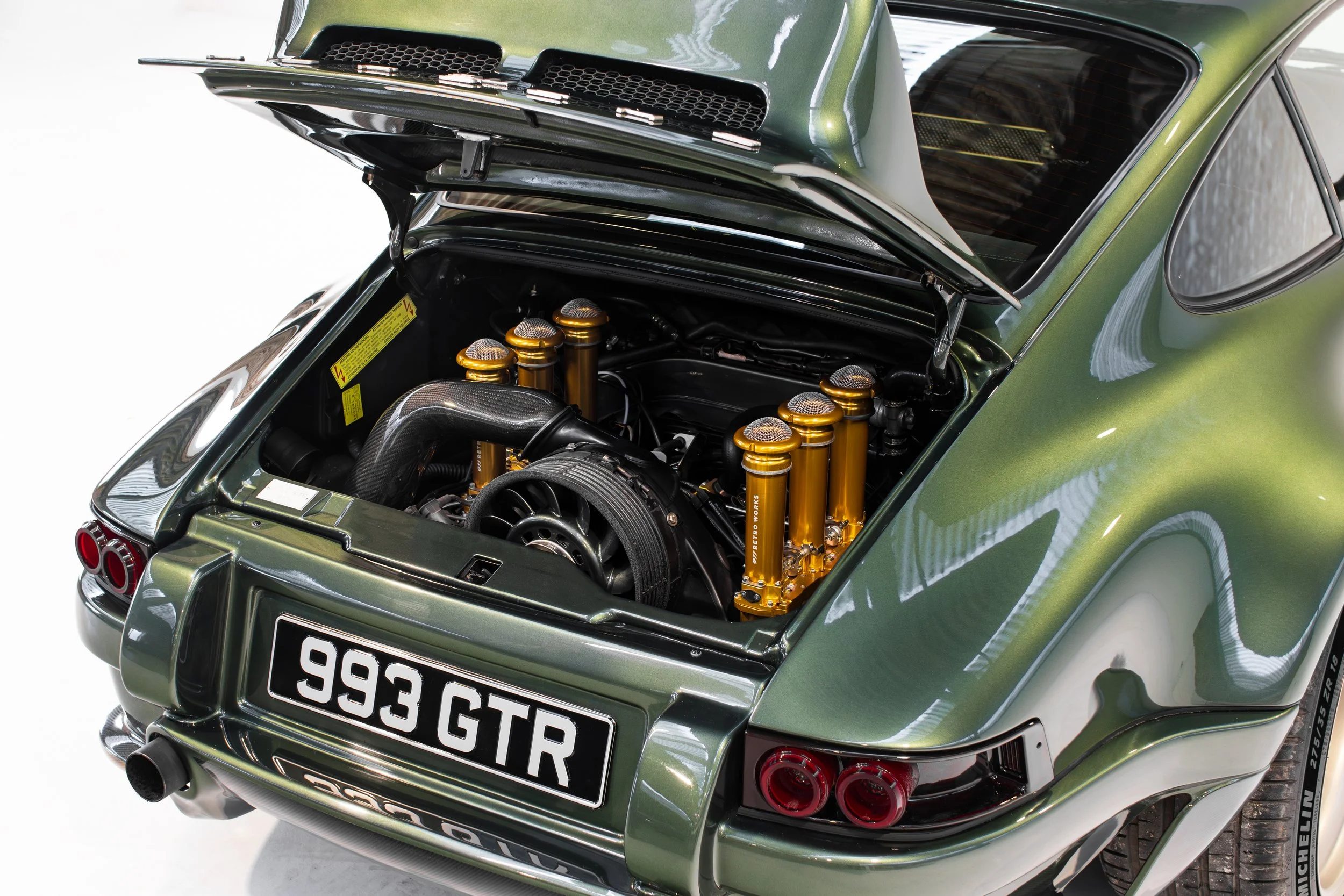
There is a pervasive myth in the classic car world. It says that vintage Porsches are "Sunday cars"—fragile, temperamental machines that should be exercised gently on clear mornings and then tucked away under a dust sheet before the traffic builds up.
At Shoreline 911, we fundamentally disagree.
We believe a Porsche 911 was designed to be driven. Not just to car shows, but to dinner, to the office, and on 500-mile road trips. However, the reality of driving a 40-year-old stock 911 in modern traffic can be stressful. That is exactly why we build our cars the way we do.
Here is the truth about living with an air-cooled legend in a modern world.
Myth 1: "They Overheat in Traffic"
The Reality: It is true that early air-cooled engines rely heavily on airflow. In a stock 1970s 911, sitting in gridlock on a hot Miami afternoon or the M25 can watch the oil temperature needle creep into the danger zone.
The Shoreline Fix: We engineer our builds for the reality of modern congestion. By integrating upgraded oil coolers (often moving them to the front fenders for better airflow) and modern fan systems, we ensure thermal stability. A Shoreline 911 is happy to idle in traffic at 90°F (32°C) without breaking a sweat, so you don’t have to stare anxiously at the temperature gauge.
Myth 2: "It’s a Workout to Drive"
The Reality: Purists love the heavy, non-assisted steering of a classic 911—on a race track. But trying to parallel park a 964 with wide tires in a tight city spot? That is a wrestling match.
The Shoreline Fix: We believe in "invisible assistance." We can install modern electric power steering systems that are speed-sensitive. They give you feather-light assistance when parking but dial themselves back to zero at speed, preserving that famous communicative road feel that defines the 911 experience. You get the connection without the sweat.
Myth 3: "The Air Conditioning is a Joke"
The Reality: Factory A/C in the 1980s and 90s was notoriously weak. It was essentially an afterthought that wheezed cool-ish air at your kneecaps while the cabin baked.
The Shoreline Fix: We install completely re-engineered HVAC systems using modern electric compressors. These are compact, lightweight, and—most importantly—powerful. Whether you are cruising in Florida or the South of France, you can actually arrive at your destination cool and collected.
The Best Part: The "Gas Station Effect"
While we eliminate the headaches of vintage ownership, we amplify the joy. Driving a Shoreline 911 turns a mundane errand into an event.
The Size: In a world of massive SUVs, a classic 911 feels nimble and perfectly scaled for narrow lanes and city streets.
The Visibility: Unlike modern cars with high beltlines and blind spots, the 911 greenhouse offers incredible visibility. It is an easy car to place on the road.
The Reaction: Be prepared for the "Gas Station Effect." A refueling stop that usually takes five minutes will take twenty, because someone will come over to ask about the car. It spreads joy wherever it goes.
The Verdict: Use It.
A Shoreline 911 is an investment, yes. But it is an asset that degrades if it sits still. Seals dry out, fuel goes bad, and engines seize from inactivity.
The best way to protect your investment is to drive it. And with a Shoreline build, you have a classic that starts every time, keeps you cool, and handles the modern world with ease.
Don't save it for Sunday. Drive it on Monday.